
Cesium-137: the childhood memory behind the Radius symbol
In September 1987, the Goiânia radiological accident marked a boy from Marília who was about to turn 6. In 1996, that memory became the symbol of a hero.
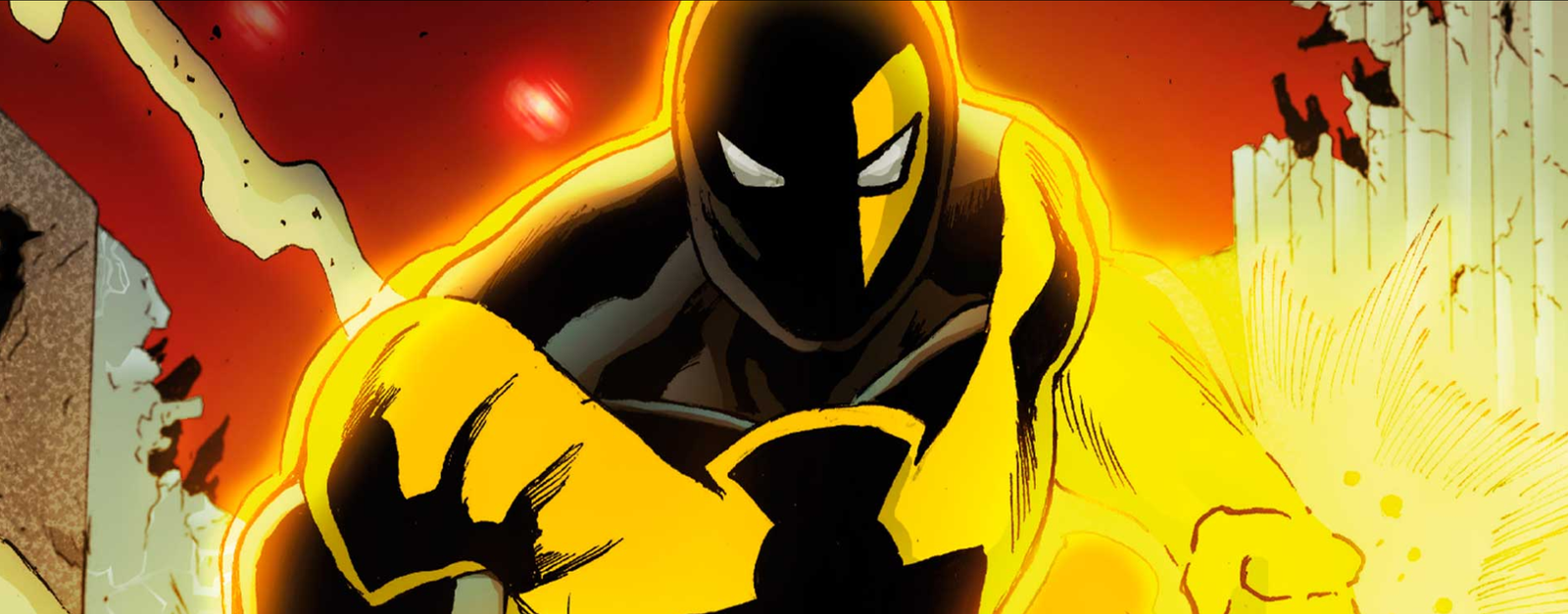
In the first post of this blog, we said that the Cesium-137 accident is among the inspirations behind Radius. The full story was still missing. It is told by the creator himself, Tiago de Moraes das Chagas, and it starts long before any drawing.
Two accidents and a child in front of the TV
Tiago was a child when the Chernobyl accident happened, on April 26, 1986. A little over a year later, on September 13, 1987, Brazil faced a drama of its own, with the radiological accident in Goiânia.
Television showed strong images: contaminated people, desperate families, objects linked to the cesium, deaths and, everywhere, the international radiation symbol.
There were only four days left until my 6th birthday and, even that young, I was overcome by a mix of fear and fascination.
Tiago de Moraes das Chagas, creator of Radius (translated from Portuguese)
What had seemed distant and impossible to happen close to home had become real. The images and, above all, the symbol stayed in his memory. His birthday, by the way, is September 17, the same date on which this blog's timeline begins.
1996: the memory becomes a drawing
In 1996, Tiago was in high school at the Professor Antônio Reginato state school, in Marília. Reading superhero comics, through friends from school, sparked the wish to create a character of his own.
Among the references the author acknowledges in his background are Mauricio de Sousa, Charles M. Schulz, Marvel, DC Comics, Image Comics and Stan Lee. They helped shape his view of storytelling, characters, humanity, symbolism, creative independence and universe building.
That is when the childhood memory worked as a creative trigger. The Radius drawn that year already carried on his chest a version of the radiation trefoil. Black and yellow, the colors associated with the radiation symbol, became a fundamental part of the hero's visual identity.
Rafael Mantovani Ribeiro played an important part in that beginning. After Tiago came up with Radius, Rafael also drew the character, and the two started producing the first adventures in a completely handmade way. Resources, technical knowledge and structure were lacking, and the project went into the drawer.
From the radiation symbol to a symbol of his own
Later on, Tiago realized the character needed an identity of his own, without simply using the international radiation symbol. That evolution led to the creation of original symbols and to the development of the Radius brand.
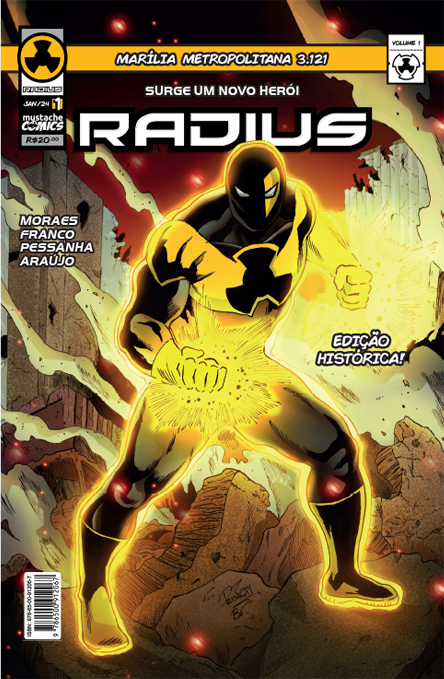
The idea never fully went away. Radius came back at different moments of the author's life and was even the mascot of Extoys, a business he created to sell action figures. On October 13, 2010, the trademark application was filed, and it was granted by INPI, the Brazilian trademark office, on January 29, 2013.
In 2020, during the pandemic, Tiago went back to old files, drawings and ideas. After 24 years practically dormant, Radius was developed again and was launched in July 2022.
What is real and what is fiction
It is worth keeping the two apart. The Goiânia accident is a real event and a real memory of the author: that is where the symbol on the chest and the colors of Radius come from. The story in the comics is fiction: it takes place in Marília Metropolitana, a futuristic version of the city, in the year 3121, with a hero linked to radioactivity.
For the author, Radius is the first superhero created in Marília. And the journey shows the persistence of an idea over time: Radius lay dormant, came back several times and, in the end, became real.


 Mustache Marketing